How much labor spend will AI capture? A lot, but not as much as the headlines suggest.

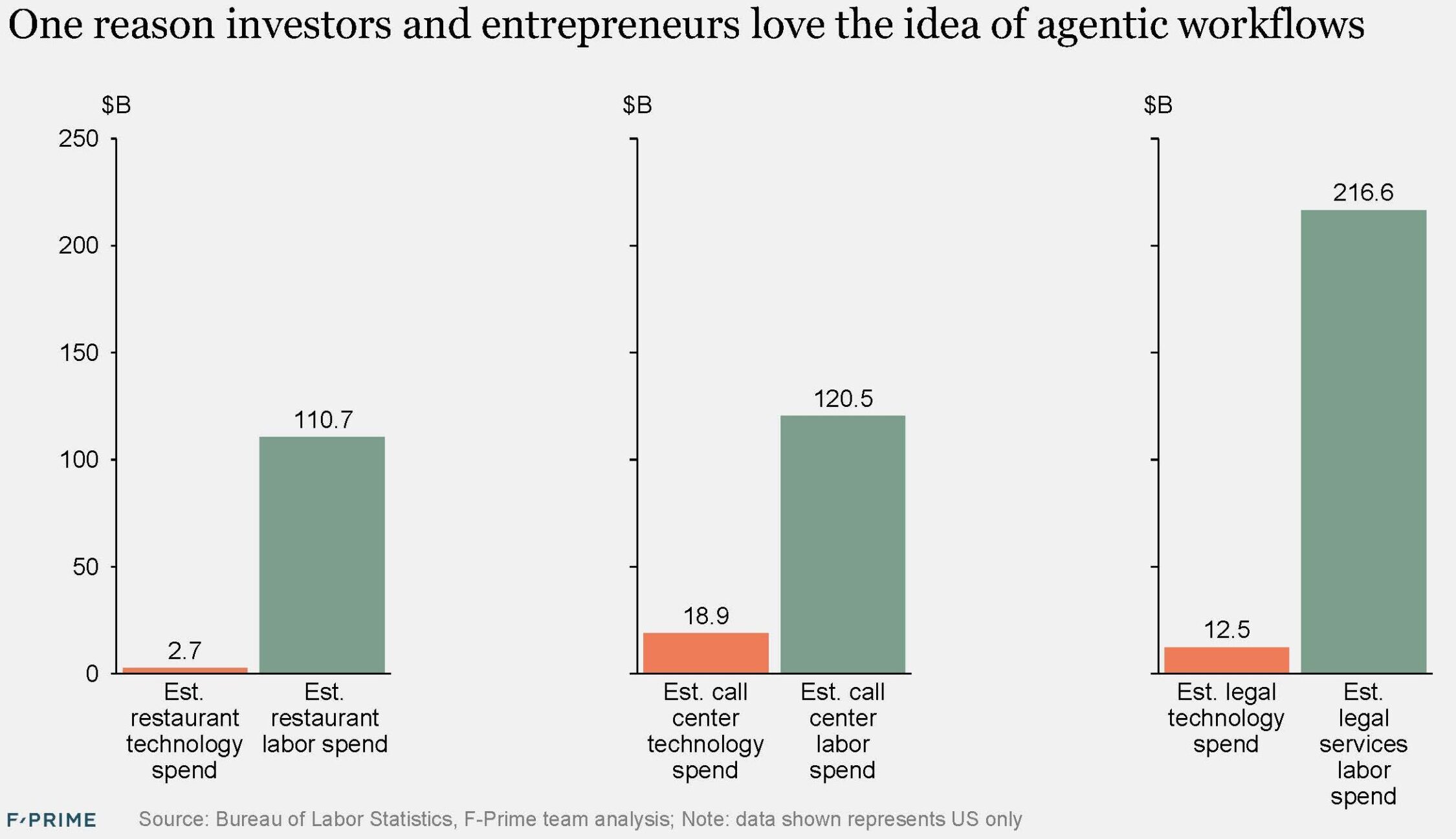
A core tenet has emerged that the AI opportunity is much larger than SaaS because it is going after labor spend which is 10-30x larger. At the headline level, this is undeniably true in almost every industry.

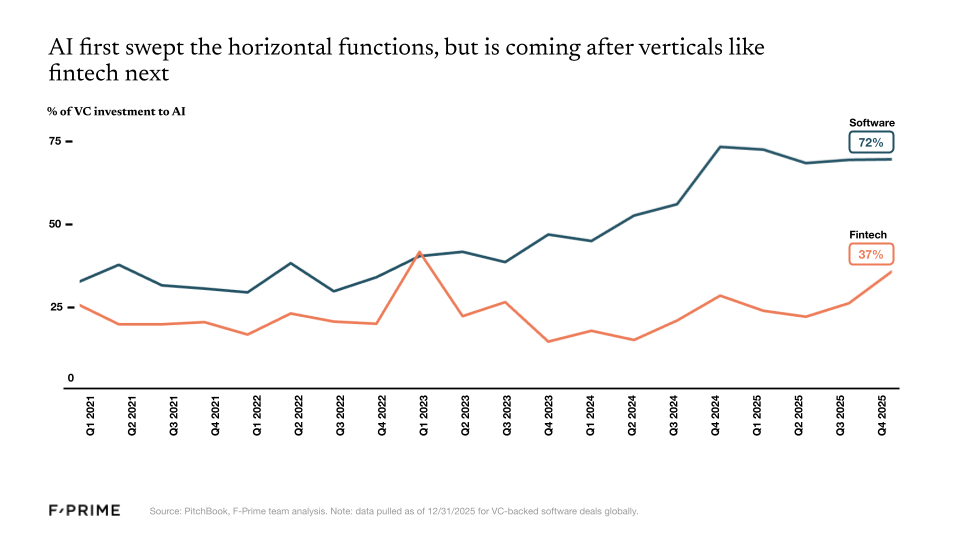
However, over the last three years we have started to see how much labor spend AI can actually capture. TLDR: It’s a lot less than the headlines, but still a large expansion from SaaS. I anticipate software spend will increase 2-3x with the addition of agentic workflows.

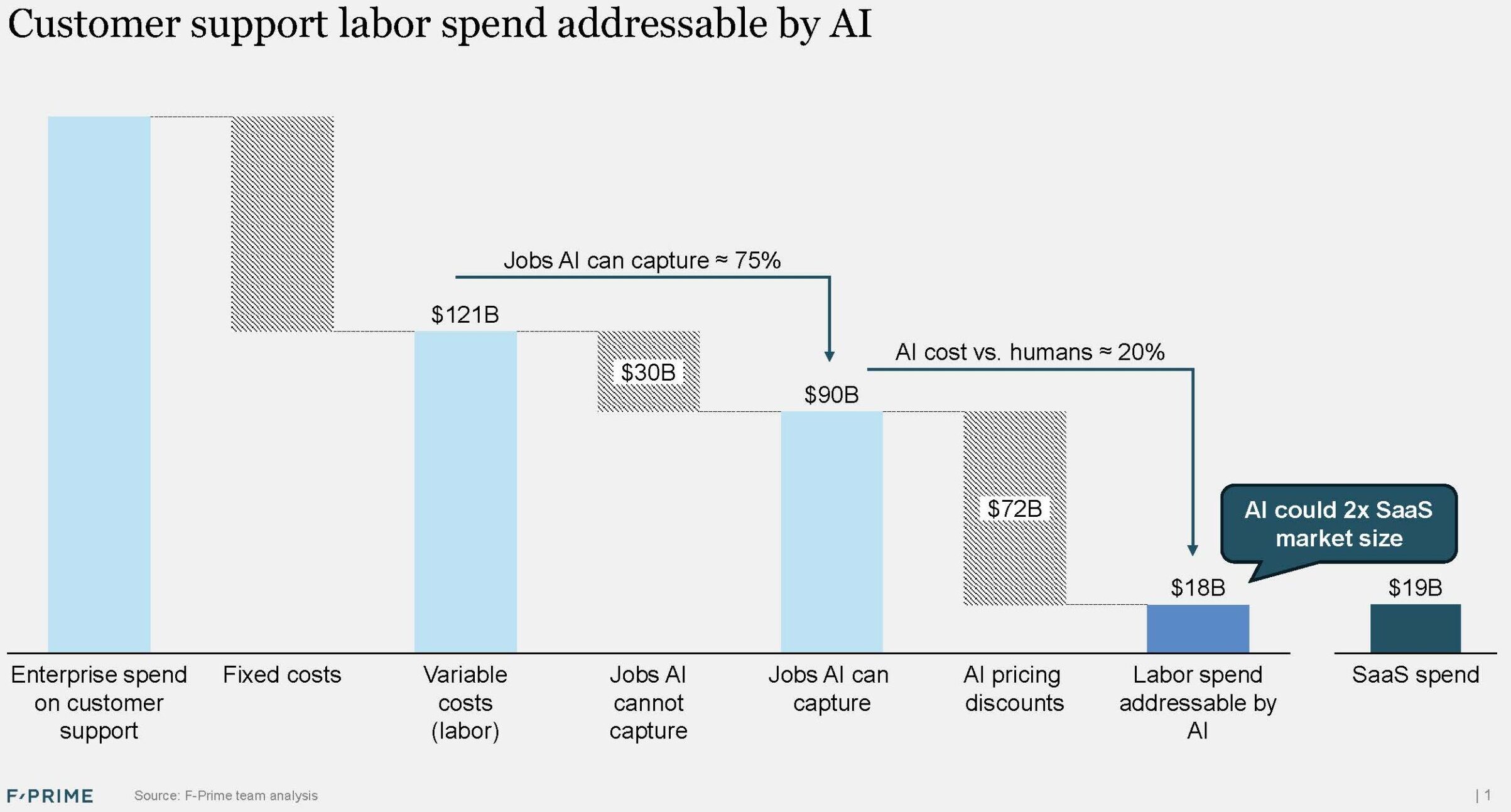
The answer will vary a lot by industry, but I am using this framework for sizing the AI market opportunity. I will illustrate it with customer support data, one of the earliest adopters of AI in the enterprise.

There are three main drivers.

#1 Fixed vs. variable costs. Call centers will continue to have management teams that hire and manage employees, procure technology, analyze data, and make decisions. Of a total customer support budget, it is typical to see 40% fixed costs, leaving 60% variable human costs doing the actual work of customer support.

% of jobs that AI can handle. This number will steadily rise as AI gets better and enterprises customize agentic workflows to their specific needs; however, it’s not going to be 100% of all customer support interactions for many reasons – one-off or highly complex support needs, enterprise unwillingness to integrate AI agents with high-risk systems like payments or prescription ordering, etc. However, out of the gate, we have seen AI handle 50% of chats and emails (less of voice calls), encouraging enterprises to target 75% deflection of support from live humans. It’s impossible to know where this settles, but 75% is possible, if optimistic. Over a long enough horizon, I will bet on AI’s inexorable improvement.

AI cost vs. humans. It is fascinating to see AI vendors pricing AI agents at 10-20% of their comparable unit of labor replacement. For example, it costs many companies $5-10 per customer support interaction (variable only), but AI vendors like Sierra, Decagon, and Maven often charge ~$1. That is 80-90% variable spend reduction for enterprises…and reduced market size for AI vendors. To be sure, as companies grow, their customer support interactions gr ow, and so will the AI market opportunity, but all things equal, aggressive AI pricing deflates the market size.

In summary, there might be 10-30x more labor spend than SaaS today, but it is probable that only 10-20% of that is accessible to AI. That is better news for people worried about losing jobs to AI, but worse news for investors hoping for a larger market opportunity. In the end, there are many ways AI could capture more labor spend, and even take spend from SaaS, so this framework will evolve. We will all learn together.

Behind the Breakthrough: Q&A with Kai Eberhardt, CEO and Co-founder of Oviva

Kai Eberhardt transformed a personal cancer diagnosis in his twenties into a lifelong commitment to improving patient empowerment and healthcare accessibility.

Diagnosed with cancer in his early twenties, Kai Eberhardt quickly learned how disheartening it can feel to navigate the healthcare system without information or agency. That experience became a transformational force, first pushing him toward deeper medical knowledge, then through a PhD in medical physics, and ultimately into the business of healthcare.

He co-founded Oviva in 2014 with engineer Manuel Baumann to confront one of the most widespread, but underserved, health challenges in society: chronic weight-related conditions (such as obesity and type 2 diabetes). Despite the abundance of clinical evidence showing that behavior change and lifestyle interventions can be highly effective, few systems were designed to deliver them at scale, and even fewer offered sustained, patient-centric care accessible to everyday lives.

Eberhardt and his team saw an opportunity to reimagine care delivery, starting with something simple: a secure, compliant chat app connecting patients and their care teams. Over time, that communication layer evolved into Oviva’s full-stack digital care platform, now used by more than one million patients across the UK and Europe.

On the heels of Oviva’s expansion into cardio-metabolic conditions, and after nearly a decade of building credibility and capability in systems like the National Health Service (NHS), Eberhardt shares what it takes to turn frustration into innovation, how the company is scaling with purpose, and why technology is only one part of the solution.

What gap in the healthcare system were you aiming to address in founding Oviva?

The idea for Oviva emerged from a common challenge in obesity treatment—most patients don’t continue treatment after one or two visits. It just isn’t practical for patients to regularly attend sessions in-person despite a demand for care.

What stood out was that these same patients were always on their phones, and unlike other areas of care, weight management doesn’t require physical exams, lab work, or imaging. It largely includes education, coaching, and real-time support. So, we asked: what if we digitized the same care that we provided in-person and delivered it on their phones, anytime, anywhere? That would make it dramatically more accessible, and likely more effective, too.

Can you talk more about how this model helps address affordability and equity?

People managing chronic conditions often juggle jobs, childcare, daily stress – and weight-related health is important, but not always urgent. That makes it easy to de-prioritize care, especially when it requires a visit to a doctor’s office on a random Wednesday afternoon.

Making care available on your phone, on your own schedule, changes everything. For example, look at the NHS Diabetes Prevention Programme – about 20% of people completed the in-person model, but closer to 70% completed Oviva’s digital version. That’s a massive difference.

Virtual care also opens the door to serving culturally and linguistically diverse communities. With digital delivery, you can tailor the content, language, and nutrition guidance for many different patients.  Curating care is almost impossible to do well in a one-size-fits-all, in-person group setting.

You integrate clinical, nutritional, and psychological care. What makes that approach so essential?

Obesity is multifactorial – you just can’t treat it through one lens. Some people need help with nutrition education, some have complex psychological patterns or trauma, and now we also have powerful medications that should be managed by doctors. No one discipline can cover it all.

Not every patient needs every service, but having a full stack available is essential to delivering effective care. We learned this from the best in-person programs –where coordination across teams made all the difference, though it was resource-intensive and hard to sustain. By operating digitally, we can bring those same multidisciplinary perspectives together without the limits of geography or scheduling.

What makes Oviva truly different from other players in your space?

We’re with our patients every day. That’s the biggest difference. Face-to-face models might give you 30 minutes with a clinician once a month. We’re a daily companion – logging meals, giving feedback, coaching, and support throughout the day. That consistency leads to better outcomes.

We’ve published more than 90 papers showing that we outperform in-person care, and because we’re digital, we can do it at lower cost and with broader reach. We’re essentially industrializing something that used to be artisanal – making personalized, behavior-change therapy highly scalable.

Regarding Oviva’s role within the NHS – what does it take to build innovation and credibility in a system as rigorous and complex as that one?

Evidence, first and foremost. I’ve always believed in backing up what we do with strong data, while publishing results publicly to build trust and demonstrate transparency.

After that, it’s about communication – having the skills and patience to speak to very different stakeholders across the NHS. And finally, it’s about partnership. We don’t try to replace services; we instead think about how we can add value to the system through better access and efficiency. This mindset helps us prove we’re here for the long haul.

You have talked about being driven by your own personal experiences in the healthcare space. Can you share how that energy helped shape your journey as a founder?

I’ve always been a pretty intense and action-oriented person. Frustration, for me, serves as a powerful motivator because it offers clarity and urgency. I don’t sit still when I see something broken. I’m not afraid to make decisions or move fast. I think that drive helped me do something many would consider irrational – starting a health tech company from the ground up in a pretty complex space.

Obesity is a field that often carries judgment or stigma. How do you lead with compassion and evidence in that environment?

Honestly, that’s one of the most fulfilling parts of what we do. Many of our patients haven’t received good care before – they’ve been judged or dismissed by the system. When we help them see real progress, it’s incredibly rewarding.

It’s not just for the patient’s benefit either. We’ve shown, with data, that our program reduces patient sick days by about a third within six months. That translates to added productivity in the workplace, tax revenue, and long-term cost savings – things that help the entire system. So, when people ask if this population is “worth investing in,” our results make the answer abundantly clear.

What advice would you give to other founders trying to build something in or alongside a public health system?

You need grit. It takes a long time to get through validation, adoption, and scaling inside a system like the NHS. The process can be very frustrating, especially when you know your solution could help people immediately, but adoption takes time.

Some delays are for good reasons, like needing strong evidence. Other delays are due to competing interests or systemic inertia. You must keep showing up and pushing forward. The reward is that once you’re in, and your model works, it’s incredibly sticky and impactful.

What excites you the most about what’s coming next?

We’re about to launch our hypertension solution, pending final regulatory approvals. It’s been in the works for two years and is a huge opportunity to build something that serves both patients and doctors more effectively – especially in how we manage data, daily insights, and ongoing support between visits.

The role of AI in all of this is just getting started. Our AI-first care model has the potential to transform patient support, making delivery more efficient and effective. We can provide even better continuity of care between doctor visits and better inform doctors for those visits. Since the ChatGPT moment, we’ve been embedding more AI features into our product, making care more scalable and improving outcomes. AI technology and Oviva are evolving rapidly – and I can’t wait to see how far we can go.

Robotics on the Rise: The State of Robotics Investment in 2025

Updating our annual report.

We had the opportunity to provide a mid-year update on our State of Robotics report at RoboBusiness 2025.  The buzz at the conference was palpable, as this year is proving to be an incredible year for robotics.  The market is hitting an inflection point with investment on pace to hit record highs, public and private market valuations growing rapidly, exits accelerating, and innovation continuing to offer transformative opportunity.  The future of robotics is more exciting than ever!

We invite you to download the report here, and reach out to authors Sanjay Aggarwal and Betsy Mulé.

F-Prime’s Summer Internship and Fellowship Program: Meet Our 2025 Interns and Fellows

A big thank you to our interns and fellows for their valuable contributions this summer!

This summer, F-Prime was excited to welcome a talented group of interns and fellows to our Cambridge and London offices. They played key roles in competitive landscape analysis, sourcing, founder calls, and more. Read on to discover what it’s like to be part of our internship and fellowship programs.


“This experience has deepened that interest, especially seeing how these tools might fit into real business contexts like VC. Listening to discussions where those kinds of possibilities are explored has also been hugely motivating. ”


“The work is creative. I expected rigorous diligence, but I didn’t anticipate how much of the job involves pattern recognition, storytelling, and forming contrarian but grounded views on where a field is heading. You’re constantly toggling between scientific depth and high-level strategic vision.”


“I am most surprised by how fast-paced and rapidly evolving the job is. The team has many new calls every day, while also having to study new technologies, keep up with the news, and manage the portfolio companies. I am learning a great deal about how to manage all these aspects of being a venture capitalist.”


“I have come to further appreciate how the venture framework is about asking the right questions rather than having all the answers. The best investors seem to pair scientific curiosity with disciplined judgment, which has given me a deeper appreciation for how to approach underwriting risk.”


“One thing that stood out is how hands-on and multidimensional the team is at every level. I expected sharp and high-level strategic thinking from partners, but it was refreshing to see just how engaged they are in the details; in every meeting, building models, debating sourcing strategies, refining TAMs.


“I was most surprised by the rapid pace of innovation and how quickly the team collaborates to evaluate and act on exciting new opportunities. I also learned how important building relationships are in the VC world. it’s not only about finding good investments but also about fostering long-term relationships with founders and industry leaders.”


“I learned about F-Prime through a family friend. I decided to join as an intern because F-Prime gets to work with amazing biotech startups and help them grow as a business. Additionally, the culture at F-Prime is extremely friendly and everyone at the firm wants to help you be the best version of yourself.”


Applications for our 2026 program are not open yet, but if you are interested in learning more, please send an email to careers@fprimecapital.com.

Kanastra: Private Credit Infrastructure Gets A Full-Stack Overhaul

At F-Prime, we have long tracked the rise of alternative assets as they become a core piece of the modern investment portfolio, and the subsequent rise of infrastructure players enabling their expansion. Within “alts”, private credit has been one of the fastest-growing and most overlooked segments. With some estimates for the asset class standing at $1.8T (largely driven by direct lending in the US), others have sized the more complex asset-based finance market in emerging economies closer to $20T. In countries like Brazil, regulators are actively encouraging investment in private credit while simultaneously spurring the creation of new non-bank and fintech loan originators. Thanks to macroeconomic and regulatory tailwinds, the market has grown 230% over the last five years, driven largely by private markets behemoths such as Ares and Patria expanding their footprint into private credit. The sector’s AUM has now outpaced the technology that supports it, with both funds and originators relying on manual, headcount-heavy processes and technologies.

As co-founders of a $500M asset management firm in Brazil, Gustavo Mapeli and Manuel Netto were well-acquainted with the pain of managing a burgeoning asset class with outdated technology. The pair built and then spun out a software product that would solve those pain points, and the result is Kanastra: a back-office platform to manage private credit funds, enabling funds and originators to more efficiently structure, manage, and monitor private credit facilities.

Currently, there is very little infrastructure to support private credit markets in emerging markets, and Kanastra has emerged as an all-in-one tech platform for funds and originators alike. In a market with too many service providers to interact with on a manual basis — fund managers, fund administrators, custodians, controllers, securitization companies, BaaS platforms, loan-as-a-service providers, and monitoring agents — the company provides a tech-forward fund admin solution with end-to-end platform features. The team’s product roadmap is smart and ambitious, with plans to automate onboarding, day-to-day management, risk management, monitoring, analytics, and business intelligence.

We were thoroughly impressed by Gustavo, Manuel, and the Kanastra team when we first met in 2022, and it has been exciting to watch their growth in the years since. Kanastra is well on its way to becoming the leading fund admin provider in Brazil, serving some of the country’s largest banks (Itaú), investment management companies (XP Investments), private credit funds (Patria Investments, Vinci Partners), and originators (Solfácil, Creditas). Earlier this year, Kanastra secured a strategic investment from Itaú alongside a commercial agreement.

At F-Prime, we are proud to have backed foundational companies in the capital markets arena like Kensho, FutureAdvisor, and Canoe Intelligence. Today, we are thrilled to announce that we are leading Kanastra’s $30M Series B. Congratulations to Gustavo, Manuel, and the whole team on the milestone, and we look forward to the years of partnership ahead.


Originally published on Forbes. 

From Shortages to Scale: Specialty Care in the AI Era

AmplifyMD’s $20M Series B fuels platform for scalable virtual specialty care.

We spend $1 of every $5 in the U.S. economy on healthcare. That’s exorbitant compared to most developed countries, where people live longer than we do at half the cost. Perverse incentives continue to drive unsustainable cost growth, with employer plans expected to grow by more than 9% in 2026. Our current model reduces employee take-home pay and saddles future generations with added debts to pay for today’s inefficient, fragmented system.

We need startups to clean up this unmanageable mess. To disrupt the current system, entrepreneurs must challenge health oligopolies (e.g., insurance carriers, PBMs, health systems) and chip away at the economic rent extracted by overpaid intermediaries (e.g., brokers, provider contractors, revenue cycle vendors). They also must build new platforms to enable efficient care delivery, powered by AI.

Provider shortages abound because the medical profession has long operated under an oligopoly and guild mentality, limiting the number of new physicians trained each year. Fortunately, technology now allows vastly more efficient distribution of provider time and talent, which could ultimately reverse the expected scarcity. The pandemic proved that care can be delivered effectively in virtual settings, despite primitive tools. As data has also become more portable, we may finally see the end of an era where provider systems hoard data to keep patients in high-cost settings and preserve unfair pricing power. Advances in software now allow “systems of engagement” to interface seamlessly with legacy “systems of record.” This opens the door to disrupting EHR monoliths and creating “new moats,” with AI poised to inject powerful new capabilities into outdated infrastructure.

These shifts create fertile ground for new platforms built for a digital-first, data-rich era, representing a new digital care architecture. AmplifyMD is one such platform – and today we’re thrilled to announce its $20M Series B financing. As an AmplifyMD director, I’ve seen firsthand how its EHR-integrated, AI-enabled virtual care platform helps health systems extend scarce physician capacity and drive material operational efficiencies. AmplifyMD allows specialists to practice anywhere, virtually treating patients in acute care settings and beyond, via its state-of-the-art platform. What began as a solution to expand specialist access in underserved settings has become a systemwide coverage solution trusted by some of the nation’s largest health systems—enabling physicians to extend their expertise without geographic limits.

The age of AI will further transform AmplifyMD’s product into an essential aspect of efficient and effective care delivery. The advent of superintelligent AI in medicine presents a golden opportunity for “creative destruction” to take root, but its potential requires modern platforms like AmplifyMD, which shift workflows from the in-person setting to always-on digital infrastructure. AI can enhance productivity and quality through clinical decision support today, and over time, may enable increasingly autonomous care delivery. This will give patients a greater ability to participate in decisions while receiving tailored treatment plans.

In the modern architecture of care delivery, AI agents will likely evolve to do the heavy lifting for all of us, freeing providers to focus on the highest leverage moments. With innovations like AmplifyMD’s platform, powered by this new financing, the industry can move toward greater access to high-quality care – an important step toward a system that respects our limits today while unlocking our innovative potential for tomorrow.


AI Can Turn the Robotics Industry’s Golden Opportunity Into a Golden Age

It took longer than many thought, but robotic systems are starting to show up in average people’s lives.

Self-driving taxis now ply the streets of major American cities, it’s now commonplace to see shelf-scanning robots roaming grocery store aisles, and humanoids dance, flip, and carry objects in videos on our social media feeds. As we’ve tracked for several years now, investors are pouring money into robotics startups — some with practical business cases, others explicitly chasing a massive disruption of the entire world economy. As long-time investors in the robotics space, it’s clear to us that the industry is now experiencing a long-sought period of momentum. So what’s fueling it?

We recently hosted two of the world’s leading roboticists — iRobot co-founder Colin Angle and Director at MIT’s Laboratory for Information and Decision Systems Sertac Karaman — in F-Prime’s Cambridge offices to discuss how advances in AI are unlocking new opportunities for robotics startups. And while the general sentiment is that we are in the early days of this AI wave, we have a “golden opportunity” to capitalize and usher in a robotics “golden age.” Here’s how.

Golden Opportunity vs Golden Age

As exciting as self-driving cars and humanoids are, most of the robotics companies receiving all that attention are not yet solving problems at scale. To move from media hype to real value creation, entrepreneurs must avoid the traps that have befallen previous waves of robotics innovation: start with real-world problems in need of a solution, not cool technology in search of an application. AI is dramatically enhancing machines’ ability to perceive, plan, and make decisions, creating a window for companies that can build genuinely useful robots instead of a generation of machines in search of a reason to exist.

So what is the role of humanoids? For now, they are generating excitement and showcasing what could be possible with AI-powered perception and control. However, commercialization is still a long way off. Nevertheless, the R&D work at the cutting edge of building humanoids is delivering technology advances that smart entrepreneurs can leverage to build viable businesses, like dual-arm manipulators, real-time human interaction, spatial awareness. Industrial cleaning, infrastructure inspection, goods delivery, and elder care are all ripe for robotic automation and technically viable with AI systems that can navigate spaces, operate in unstructured environments, and work alongside humans,.

Smart entrepreneurs are already mapping physical AI opportunities by asking: what level of dexterity is required? Does it need emotional intelligence? How generalizable must the system be? From that framework, they’re building task-specific robots that solve pressing problems now, not 10 years from now.

The Role of AI Foundation Models in Robotics

Think of robotics foundation models as a generative pre-trained transformer (GPT) for motion and manipulation. The challenge here is that while robotics data is available, it’s expensive. Entrepreneurs can’t scrape the internet for robotic grasping demos. Collecting and labeling real-world interaction data at scale is hard, slow, and costly, with an uncertain payoff for startups. It is ultimately a game of who raises the most capital, which is out of reach for most startups.

As a result, smaller, skill-specific models will be much more valuable in the near term. Foundation models for warehouse navigation, or picking and placing in cluttered environments, or understanding facial expressions and verbal language will be cheaper to build, quicker to deploy, and easier to tune. For businesses going after a specific, real-world use case, these smaller foundation models will offer early traction and real ROI without waiting on a billion-dollar general-purpose robotics brain.

From Tools to Real-World Impact

Recent AI breakthroughs are answering a long-standing question in robotics, which is whether the technology’s limits lay in software or hardware. As we’ve seen, today’s robots can walk, run, and even do backflips because of smarter code and learning systems, not some radical new motor.

AI is creating a new toolbox for robotics engineers. Ten years ago, basic robotic manipulation was unreliable, but AI has enabled the creation of perception stacks that understand 3D environments, reinforce learning to teach agile motion, and adjust in real-time via smart control systems. Thanks to these tools, robots can now fold laundry and scramble over rubble — not exactly headline-grabbing use cases, but they are the foundations of real businesses with real revenue.

AI-Assisted Design

When designing chips, AI can optimize transistor placement far better than human engineers. We’re now seeing the same dynamic in robotics. AI-enabled simulators are starting to bridge the sim-to-real gap, making robot training faster and easier. At the same time, simulations combined 3D printing and rapid prototyping enable engineers to significantly shorten design cycles.

As a result, the future of robotic design may not be intelligible to humans. AI systems trained through simulation and reinforcement learning could generate optimal algorithms and designs that weren’t obvious to human engineers, just like AlphaGo will play moves that no human had previously imagined.

The real transformation in robotics is happening under the hood, in the tools, workflows, and enabling technologies that AI has brought to life. The robotics industry currently faces a golden opportunity. But the golden age will follow after a few standout successes — built on the most useful system, not the flashiest robot — show what’s possible.


Read our 2025 State of Robotics report here.

Spinwheel: The Connective Tissue for Credit Data

Most users are very willing to link their bank accounts with popular financial applications like Venmo, Coinbase, and Robinhood. However, the data exchange that underpins those seamless monetary transfers is merely the first iteration of a new paradigm in the financial world: open finance.

Open finance enables a world where consumers and financial service providers can access financial data like spending, investments, payroll, loans, and tax information via API. With it, they can understand their financial situation and make better decisions about budgeting, borrowing, lending, and financial products. With questions of technical capability and regulatory permission mostly settled, the ability of data aggregators to deliver timely, comprehensive consumer financial data now steers the industry’s movement towards a world of open finance.

Yet while open finance tools now provide consumers with access to information about their financial assets, information about their debts and liabilities remains far less accessible, more opaque, and more scattered. The consumer debt market is an enormous part of the US financial ecosystem. Federal Reserve Data reports $19T of outstanding consumer liabilities. Equifax data shows that Americans are on track to originate 134M consumer loans across auto, bank and private label cards, mortgages, HELOC, consumer finance, and student categories in 2025 alone. Consumer debt is also a critical source of stress for many American households.

Unlike the asset side of their lives, data about the average American’s debts and liabilities are spread across multiple loan providers running legacy tech stacks. All this in an industry where nuanced, granular, and real-time data is essential for consumers to know exactly how much they owe, to whom, and when it’s due. Consumers are eager to budget, manage debt, and improve their credit scores, and banks and FIs are eager to meet the need with budgeting applications, credit monitoring, and credit-building tools. All that’s missing is the data aggregation connecting the two.

At F-Prime, we’re proud to have backed foundational companies like Quovo, Even Financial, and Kensho that allowed consumers and financial services providers unprecedented visibility and access to users’ financial assets. Now, we’re excited to partner with Tomás Campos, Tushar Vaish, and the Spinwheel team to do the same for their liabilities. Spinwheel is an API for consumer liability data that provides consumers, banks, lenders, and fintech companies with the ability to aggregate, understand, and manage consumer debt. It uses proprietary direct integrations and agentic workflow to collect permissioned, consumer liability data across credit card transactions, mortgages, auto loans, student loans, personal loans, and more, with the highest degree of coverage and accuracy in the market today. We’re excited to lead Spinwheel’s $30M Series A and join them at the forefront of financial infrastructure.

RIP Old VC Playbook: How Investors Are Changing AI Startups Evaluation

Originally published in Forbes

The AI revolution is moving so much faster than previous technological shifts. While the mobile internet took nearly a decade to reach 90 percent household adoption, ChatGPT achieved the same user penetration in just two years. This accelerated cycle is creating companies that reach incredible scale in record time, but it’s also rewriting the venture capital playbook. The traditional rules of SaaS investing are being challenged, and the moats we once relied on are becoming less defensible. Based on recent discussions my Eight Roads Ventures colleague, Michael Treskow, and I have had with our team, here are ten ways investors are changing how they evaluate AI startups today.

1. Agents Are the Future — Not Just Co-Pilots

The first wave of AI applications was dominated by “co-pilots” — tools that assist humans. The next, more powerful wave is characterized by “agents” — autonomous systems that complete tasks from beginning to end. These agents are transforming traditional “systems of record” into “systems of action.” As an investor, the key question goes beyond the earlier paradigm of “does this make a workflow more efficient?” Now, investors must ask, “can this automate the workflow entirely?” How (and to what degree) humans are involved will depend on the AI-use-case fit, enterprise risk appetite, and the existing workflow. As an example, Roo Code has multiple modes, from code mode to architect mode, based on customers’ specific needs. Early breakouts are already emerging in specialized fields like cybersecurity (penetration testing agents), DevOps (debugging agents), and financial services (memo generation agents), showing the power of vertical agents.

2. Traditional SaaS Moats are Diminishing

The three defensive moats that defined the SaaS era are eroding:

Implementation Friction: In the past, the high cost and complexity of implementing enterprise software, especially in regulated industries, created stickiness. Today, AI agents can write code and automate implementation, drastically lowering switching costs.

Workflow stickiness: SaaS used to be the system of record, deeply embedded in the enterprise workflow. But now that agents are performing the workflow entirely, it could reduce the friction of migrating.

Data Gravity: The effort of migrating data from one system to another created a powerful lock-in. Now, AI models can automatically ingest and structure data from various sources (including emails, calendars, and documents) making it far easier to populate a new system, and thereby reducing the stickiness of the incumbent.

3. Enterprise Knowledge, Trust, and Observability Are the New Defensibility

With the underlying models increasingly turning into an API-accessible commodity, differentiation is shifting up the stack to the application layer. The most defensible companies are building new moats around enterprise knowledge, trust, and observability.

When considering workflow integration, investors must figure out how deeply the product is embedded within a customer’s core business processes, or how well the agents internalize the enterprise knowledge if there is forward-deployed engineering. Just like a service provider, the more an agent has absorbed the enterprise’s organizational and operational intricacies and preferences, the harder it is to replace. The second moat, centered on becoming a trusted, default partner, is related to an older sales and marketing principle: In a confusing market, enterprises are looking for a trusted guide to shape their AI strategy. The first vendor to gain a customer’s trust and become their “default” AI partner gains an immense advantage, with the ability to expand across the organization.

The low barrier to entry means that for any given problem, a dozen well-funded players can emerge almost overnight. This has made product-market fit (PMF) a potentially transient advantage. A company might find a temporary fit and grow to a few million in ARR, only to be outflanked by a competitor with a new feature or a slight improvement in the model. As an investor, you must constantly ask: is this PMF durable?

5. The “Incumbents Are Slow” Argument Is No Longer a Given

Two ideas — that incumbents will be slow to act and that customers building in-house solutions will fail — that once formed foundational pillars of venture investing have now been turned on their head.

Incumbents now have access to the same powerful APIs as startups. And while cultural inertia at enterprises remains a challenge, the technical barrier to entry has been lowered, and the proprietary data they have accumulated over the years will give them a head start. Similarly, with modern orchestration tools like Thread, Onyx, or n8n, it’s becoming more feasible for customers to build their own bespoke AI agents in-house. A startup’s competition is no longer just other startups, but also its own customers and the very incumbents it aims to disrupt.

6. TAM May Increase, but Advantages Become Less Obvious Once Pricing Normalizes

A critical shift in the AI era is the expansion of the total addressable market (TAM) beyond traditional software budgets. AI companies can now tap into two distinct enterprise spending pools. “Co-pilot” models, which assist human users, are typically sold on a per-seat basis and compete for existing software budgets. Autonomous “agent” models complete workflows end-to-end, are sold on a per-outcome basis, and hold more transformative potential.

AI agents are positioned to capture a share of the much larger services budget, effectively replacing costs previously allocated to human labor or outsourced services. However, while the opportunity to capture the services budget is immense, it is not a blank check. As some founders have noted, many are generating eight-figure savings while charging customers six-figure prices. As agent-based solutions become more common, the price for automated labor will inevitably face downward pressure and normalize, meaning the initial advantage of charging rates comparable to human labor may not be sustainable long-term.

7. Team Composition Looks Different at AI Companies

AI-native companies are operating with unprecedented efficiency. While a company like Cursor can have great PLG motion and reach $100M ARR with around 30 employees, most enterprise AI companies build a GTM team to reach scale. In a confusing market with intense competition where perceived product differentiation is limited, GTM makes all the difference. On the tech side, CTOs with an ML background will be more essential in the foundational model and middleware layer than in the application layer. Having a Head of AI to stay on top of the latest feature releases and skate to the right opportunity will create a nice complement as the CTO scales the technical organization and infrastructure.

8. SaaS Metrics Still Matter, but in a Different Way

LTV/CAC is still relevant, but velocity matters more. The “Triple, Triple, Double, Double, Double” (T2D3) growth model for top-tier SaaS is being replaced by an even more aggressive trajectory. Some have suggested the new top-quartile metric is “Quintuple, Quadruple, Triple.” For example, a company would grow from $1M to $5M, $5M to $20M, and $20M to $60M over three years. While this velocity is exciting, it can also be misleading. Rapid adoption in a hot market doesn’t guarantee a large TAM or durable revenue. While there is no public benchmark for churn metrics for AI companies yet, we know some of enterprise AI companies’ net revenue retention (NRR) at month 12 is well above 100 percent to compensate for the logo churns — see Glean at 120 percent, Writer at 160 percent, and Jasper for enterprise at 163 percent.

9. Scrutinize Gross Margins and Unit Economics

AI companies often have high compute and model inference costs. While we see margins improve over time, investors must be vigilant about how costs are reported. As others have noted, companies may claim impressive gross margins even though a closer look at their P&L reveals millions in API calls and compute costs categorized under R&D. When re-categorized correctly, their margin was actually negative. Investors must always dig into the P&L to understand the true cost of goods sold.

10. Customer Love Doesn’t Guarantee Retention. Product Usage Is The True PMF

In a normal market, a high net promoter score (NPS) is a strong signal of future retention, but not necessarily in the current AI landscape. Customers may unanimously love a product today, but the market is evolving so quickly that a better alternative may appear in six months. Many enterprises are intentionally building flexibility into their tech stacks to easily swap vendors, so founders and investors alike should beware of “vibe revenue.” Therefore, look beyond NPS to metrics like product usage, which is a leading indicator of retention. Beware of “stealth churn,” where customers who are still paying see less frequent usage, or use a product for a lower percentage of their entire workflow.

dataplor: The Gold Standard in Location Intelligence

Whether you are building an autonomous delivery robot, identifying the best-performing Zara in the Netherlands, or comparing visits to Starbucks versus Dunkin’ Donuts in Boston’s Back Bay, actionable insights hinge on clean, highly accurate, up-to-date point of interest (POI) data. Across so many sectors, these insights underpin expansion plans, demand forecasting, customer targeting, underwriting, partnerships and more.

And yet, high-quality location data remains elusive. Historically, only large enterprises had the resources to acquire and leverage location data in their strategic decision-making processes, often stitching together multiple sources, or paying consultants or outsourced clipboard armies to collect data on the ground. Even then, coverage gaps and stale information were common. Maintaining your own POI data is expensive, painstaking work that requires perpetual aggregation, validation, and enrichment, making it a great candidate for outsourcing.

However, none of the POI players that emerged have come armed with a truly comprehensive set of high quality, global location data — until now. Since meeting Geoff Michener and the dataplor team in 2023, we’ve been impressed by their relentless focus on delivering clean, reliable POI data across more than 250 countries and territories. dataplor’s solution is mission critical to Global 2000 companies in tech, consumer goods, logistics, retail, F&B, and finance for geospatial analyses, operational workflows, and growth initiatives. The company’s data service is refreshed regularly with rigorous quality checks, and goes far beyond basic business names and addresses, enriching each location with brand, transaction, persona, foot-traffic estimates, hours of operation, sentiment scores, popularity metrics, and more. It truly is an unmatched combination of depth, breadth, and global coverage.

At F-Prime, our investments in data platforms like Lighthouse, Quovo, 1uphealth, and Canoe have reinforced our conviction that outsized value is created by starting with exceptionally high-quality data. The difference between 95 percent and 99.9 percent accuracy is massive and consequential for discerning customers. dataplor is democratizing access to highly accurate, actionable POI data, empowering organizations to make better-informed decisions and personalize customer experiences at scale. With the team’s exciting vision and roadmap, we are honored to partner with Geoff, Ryan, and the rest of the dataplor team on their $20.5M Series B.