AlphaGen Therapeutics is a radiopharmaceutical company focused on the discovery, development and commercialization of innovative targeted radioligand therapies (RLTs). Leveraging its cutting-edge technology platform, the company aims to develop targeted RLTs for patients in China and around the world.
Sector: Life Sciences
Raj Basak, PhD
Raj Basak is a Senior Associate with F-Prime and works across the healthcare sub-sectors including therapeutics, medical technology, and life-sciences tools. Prior to joining F-Prime, Raj was a member of the Healthcare Investment Banking team at Goldman Sachs in New York where he worked on over $15 billion in announced financing and M&A transactions across biopharma.
Raj received his PhD in Molecular Biophysics & Biochemistry from Yale University and was a part of the Program in Physics, Engineering, and Biology (PEB). Raj’s doctoral research focused on studying the biophysical mechanisms underlying nociception in sensory neurons. While in graduate school, Raj was also a Canaan-Yale fellow with Canaan Partners and an analyst with Certara.
Prior to graduate school, Raj worked in laboratories at Columbia University Medical Center and Brown University. His research has been published in Biophysical Journal, Nature, Science Translational Medicine, among others. Raj also holds a B.S. in Physics with Research Honors from The Macaulay Honors College at The City College of New York, where he was awarded the Ward medal. His undergraduate thesis focused on interrogating field theory approaches to quantum tunneling.
Behind the Breakthrough: Q&A with Emanuele Ostuni, ARTBIO
What does it mean to be CEO? It is more than holding the highest-ranking position in an organization. It is becoming a business builder.
In a way, all CEOs have the same responsibilities — expanding the company, collaborating with the board, engaging stakeholders, defining strategy, and creating a positive culture. However, the way in which one approaches these tasks is a means to stand out from the crowd.
Emanuele Ostuni is founding CEO of ARTBIO and worked closely with Roy Larsen and ARTBIO’s investors to build the company and its business model. Previously, he was head of Europe for Cell and Gene Therapies at Novartis Oncology, where he oversaw all commercialization aspects for Kymriah in Europe, the first FDA-approved CAR-T cell therapy.
For Ostuni, he never spent time in radiopharmaceuticals, but his role at Novartis had overlapping complexities. The products they were pursuing were multifaceted to make, deliver, and administer and he got satisfaction out of sorting through how to simplify it for patients, physicians, and ultimately payers. He felt his best when he was managing something multi-dimensional.
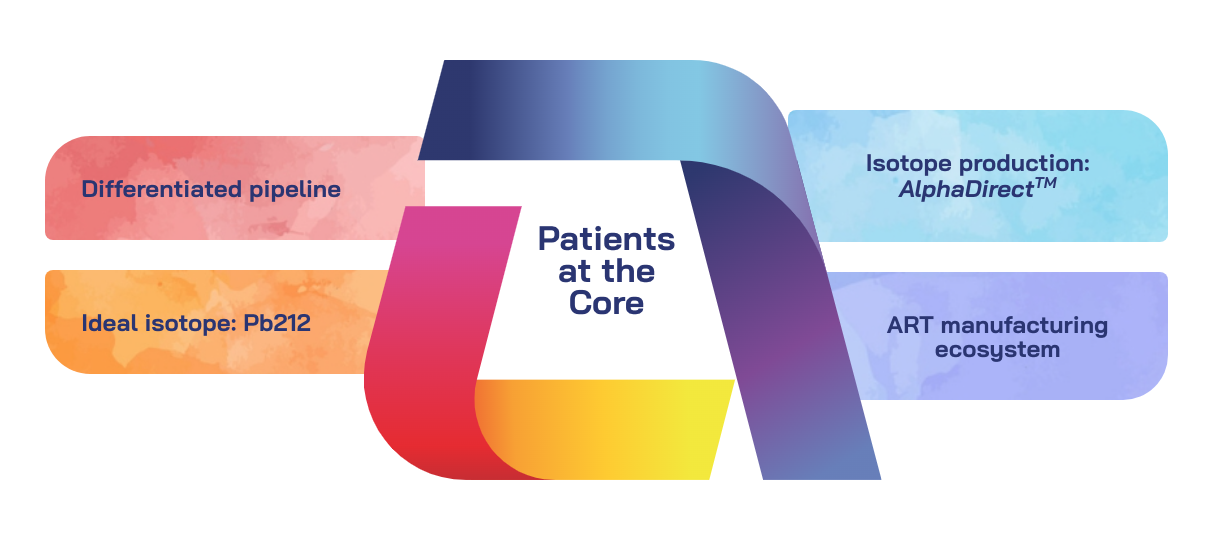
He explained, “The potential for efficacy in radiopharmaceuticals is high and there is an opportunity to build a platform, establish a supply chain and create a differentiated pipeline that allows ARTBIO to stand out from what the rest of the industry is doing.”
As ARTBIO launched in June 2023 with a $23 million seeding financing, Ostuni shares what drew him to ARTBIO, insights into his current role including leadership style, and advises fellow CEOs to connect with each other since they are “the few people who really understand what we go through.”
1. What motivated you to join ARTBIO?
As a scientist and seasoned executive, I was really intrigued by the potential of the technology and the science behind the company. The radiopharmaceuticals industry is not as well developed as the rest of oncology and immuno-oncology offering an opportunity to extract some good wins for patients while at the same time moving the field forward in a meaningful way.
In my early conversations with the F-Prime team, they were very open about sharing what they were thinking about and allowed me to share my views on how my experience in CAR T could lend itself to the innovation that was required to bring forward radiopharmaceuticals. It became a joint project very quickly where everybody brought something. F-Prime identified the technology from the scientific founders and allowed me to assess how it could be pushed forward.
2. What differentiates ARTBIO from other RLT players in the industry?
Our choice of medical isotope was driven by what is best for patients to beat their cancer. With that decision, we built backward to the technology needed to produce the isotope and have supply chain security – we are unique in that we also own and control the manufacturing of isotopes instead of relying on a third party. Our manufacturing approach is distributed to match the dynamics of the isotope, instead of trying to force fit it into a centralized approach that is exposed to several risks as most others are doing – issues with that approach have already surfaced with a negative impact on patients. Lastly, we created our own discovery labs to build a pipeline of new experimental therapies leveraging our ideal isotope manufacturing. We are creating this important infrastructure in part alone and in part in collaboration with a focus on simplifying and improving the delivery of therapies to patients and hospitals.
3. What’s been the most rewarding aspect of ARTBIO coming out of stealth?
We recently attended the Society of Nuclear Medicine and Molecular Imaging’s 2023 Annual Meeting, and it was amazing to see the team in action. I am most satisfied when I see them succeeding and it really showed when we were there all together. At ARTBIO, we believe in the importance of teamwork, exchange, and collaboration to bring our field forward.
We were also having conversations with peers and investors, both on the ground and in the background, that gave me clarity that we have accomplished a tremendous amount. Since the fundraise, it is clear to me how our differentiation from competitors is emerging. We are inspired by the many advances and innovative ideas that our industry is working on and there are many unmet needs left to be addressed.
4. How would you describe your leadership style?
I tend to be a giver, and I start with trust. I am also an experimentalist by nature and focus less on if something is right or wrong, but rather on having a robust approach and hypothesis. If things do not work as well as we expected, I ask why? What is the learning so that we quickly adjust and reach our goals?
I also surround myself with deep experts who also have personal characteristics that I think are critical for our team. We are building a new space, and the way things worked in the past is not going to work this time around. I am looking for people who have expertise in neighboring areas of the business, and also the ability to learn what is going to be different about our approach from what’s been done in the past. I aim for people who are driven and those who are doing it in a humble way. They put the team before themselves, thrive on data and value the importance of being transparent.
5. What’s one lesson you’ve learned so far as CEO of ARTBIO?
As a giver, it is hard to stop, but as CEO I have had to learn to modulate and know when it is the right time to stop serving. The CEO role can be a bit lonely, but I prioritize understanding what my stakeholders need rather than what I need from them.
6. ARTBIO just launched, but are there any noteworthy goals that you as CEO are currently focused on achieving?
My number one focus right now is rounding out the team. We can fundraise, but we need the people who manage those funds. I want to bring people with the right know-how, and also those who have chemistry with the team that we have in place now. Only the team can move the company forward.
As we work to optimize isotope manufacturing, therapy manufacturing, preclinical research, and clinical development, I need to make sure that all aspects move forward without becoming each other’s obstacle.
7. What is the best piece of professional advice you’ve ever received?
I have been blessed with many managers, peers, and direct reports who taught me a lot through their actions and words. The quote that I always go back to that summarizes a lot of my learnings and attitude is by Winston Churchill: “Success is not final, failure is not fatal: it is the courage to continue that counts.”
Subscribe to our newsletter to get the latest updates on how our portfolio companies continue to lead the way in their respective fields.
Revolutionizing gene-based editing to create lifelong cures
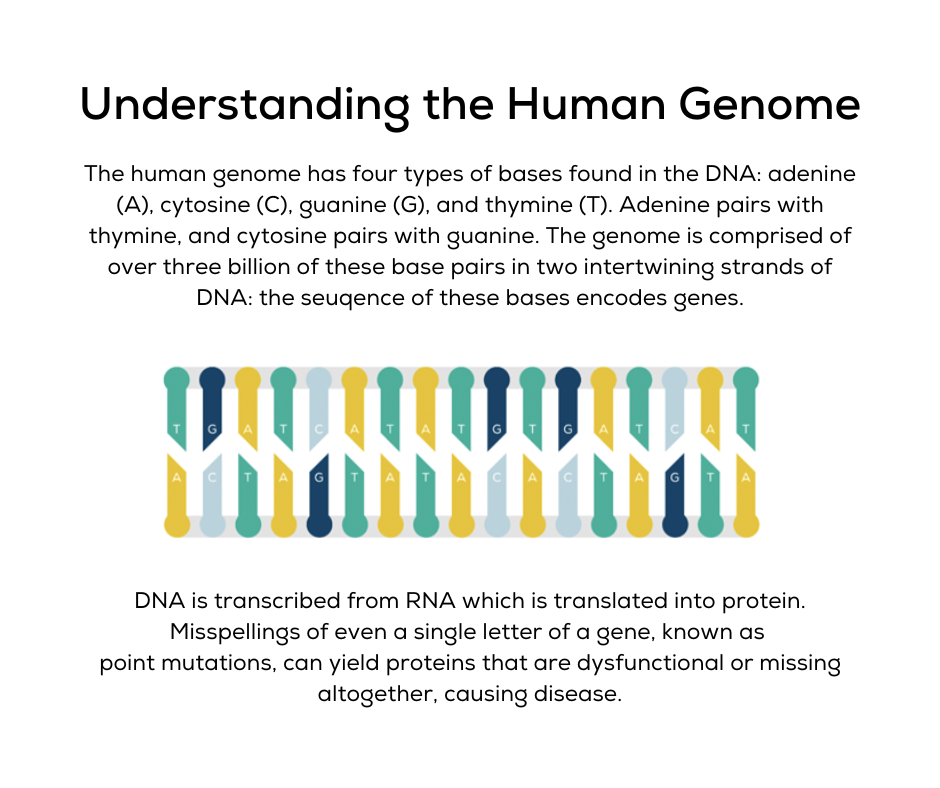
The team developed a DNA base editing technology that enabled more precise edits through direct chemical conversion of one base to another compared to approaches that introduce double-strand breaks.
Unlike first-generation approaches that introduce double-strand breaks, Beam’s base editing allows precise edits through direct chemical conversion of one base to another to address the point mutations that underlie many human diseases.
Industry Overview: The dawn of a new era in gene editing with CRISPR
CRISPR gene editing ushered in a new era of both modifying and understanding the genome. Prior editing approaches such as zinc finger nucleases, TALENs, and meganucleases are more cumbersome, costly, and time-consuming, as they require significant protein engineering for adaptation to the corresponding target sequence. In contrast, CRISPR uses a guide RNA to direct the active protein to specific genomic sequences through base pairing with the target location. Once in place, CRISPR cuts DNA and then allows natural DNA repair mechanisms to take over.
The Opportunity: Understanding use cases – gene disruption vs. specific gene editing
First-generation editing technologies, including CRISPR, rely on introducing double strand breaks into the genome. While precise edits could theoretically be achieved through homology-directed repair (HDR) or non-homologous end joining (NHEJ), these processes are much less efficient, and as such, traditional editing approaches are more suited for gene disruption than for specific and precise gene editing. Safety is also a lingering concern with first-generation editing approaches due to the potential for chromosomal rearrangements, as insertions and deletions occur with high frequency.
CRISPR sparked a revolution for new, next generation gene editing technologies that allow scientists to more efficiently and precisely modify the genome.
Why We Invested: Supporting the next wave of gene editing technologies
At F-Prime, we understand that breakthrough technologies require time to develop, which is why we continue to seek out innovators pioneering new approaches who embrace both the excitement and the challenges associated with advancing nascent modalities alongside us.
F-Prime recognized the transformative therapeutic potential of DNA editing and made early investments in companies focused on furthering CRISPR-based platforms such as Caribou. We also realized the power of technologies that could achieve direct single nucleobase editing to significantly expand the overall utility of this entirely new therapeutic category.
Our affiliate FBRI, which is comprised of a team dedicated to supporting research efforts to identify breakthrough discoveries, funded David Liu’s early base editing work. Dr. Liu is a renowned gene editing expert, scientific co-founder of Editas and Harvard and Broad Institute researcher. His team developed a DNA base editing technology that enabled more precise edits through direct chemical conversion of one base to another compared to approaches that introduce double-strand breaks. This discovery paved the way for the second generation of gene editing technologies and ultimately led to the creation of Beam Therapeutics.
Source: Beam Therapeutics
To facilitate the progress of this tremendously promising research, we invited the company to work out of F-Prime’s incubator office space with biopharma executive, John Evans, leading the team as CEO. Meanwhile, F-Prime’s President and Managing Partner, Stephen Knight, MD, and Partner, Jessica Alston, PhD, helped to establish the company by assisting with licensing and IP discussions, and other members of the F-Prime team supported the company with recruiting key management hires, developing a strategic business plan and ultimately preparing the company for its public offering.
Founded in 2017, Beam Therapeutics raised nearly $223 million privately before going public in February 2020. They also announced a collaboration with Pfizer in January 2022. Today, Beam Therapeutics is a leader in harnessing base editing to develop precision genetic medicines that provide lifelong cures to patients suffering from serious diseases.
Learn more about Beam’s approach and vision for base editing in this video.
Our Focus: F-Prime continues to invest in biotech leaders
As we did with Beam, we’re constantly searching for the next breakthrough to invest in; sometimes, we build companies from scratch which we’ve done over 30 times and counting.
The convergence of science, technology, and healthcare in ways that achieve groundbreaking advancements gives rise to inspiring businesses and great investment opportunities.
“F-Prime played a critical role in establishing and growing Beam, helping us assemble our team and develop our vision to become the leading platform for precision gene editing. We are incredibly grateful for the team’s support for our mission to bring life-changing treatments to patients suffering from serious diseases.”
—John Evans, CEO
Tenpoint Therapeutics
Tenpoint Therapeutics™ is pioneering a new treatment for presbyopia, BRIMOCHOL™ PF, with a PDUFA date from US FDA of January 28, 2026. The company also has a R&D pipeline of novel therapies for other unmet needs in ophthalmology.
ARTBIO: Redefining cancer care through an entirely new class of alpha radioligand therapies (ARTs)
There is a need for better isotopes to make ARTs that will enable transformative efficacy and a stable treatment supply for reliably reaching patients.
ARTBIO is developing ARTs that have the potential to unlock a new generation of more effective and safer precision oncology medicines.
Radiopharmaceutical Landscape: Seeking a best-in-class isotope
Radioligand therapies are a category of innovative targeted cancer medicines. These drugs home specifically to tumors to deliver a potent radioactive isotope warhead, causing catastrophic DNA damage and cancer cell death. While the radioligand landscape is currently dominated by beta-emitting isotopes, the alpha emitters comprising ARTs are expected to offer a superior therapeutic index, because they can directly cause double-strand DNA breaks, which are lethal to cancer cells, and, due to a shorter emission distance, alphas can kill tumor cells locally while sparing nearby healthy tissue.
Early clinical data with a warhead called actinium-225 (Ac-225) supports the potential for ARTs to be more effective than beta emitters. However, the supply of Ac-225 has been limited creating a challenge for deploying ARTs at scale. Ac-225 also has a relatively long half-life, facilitating distribution but potentially limiting maximal therapeutic efficacy. There is a need for better isotopes to make ARTs that will enable transformative efficacy and a stable treatment supply for reliably reaching patients.
The Origin Story: Capitalizing on a foundational discovery
In observing the many complexities in the field (including recent supply chain challenges faced by pharma), F-Prime Partner Alex Pasteur, PhD, and Senior Associate, Martin Taylor, PhD, searched for a viable solution that would fully unlock the tremendous potential of ARTs. They established relationships with world-leading experts Roy Larsen, PhD, and Øyvind Bruland, MD, based in Oslo, Norway, and became interested in an innovative approach they were developing for ARTs.
“ARTBIO’s roots trace back to a remarkable scientific discovery of the 20th century by Marie Curie that radium can destroy tumors, and the early dissemination of that discovery to Norway,” said Alex Pasteur. “We have tapped into long-established expertise at the Radium Hospital in Oslo for some of the foundational technology in ARTBIO.”
Roy and Øyvind are serial entrepreneurs in the radiopharmaceuticals field. They previously co-founded Algeta (acquired by Bayer) and invented Xofigo®, a drug for prostate cancer patients based on radium and currently the only alpha-emitter based medicine on the market. Alongside other companies they founded, their expertise and success has established Oslo as a hub for innovation in radiopharmaceuticals.
“F-Prime’s global presence, including our office in London, enabled us to identify radiopharmaceuticals as an area of excellence in Europe, where we saw a thriving ecosystem with an exceptional degree of innovation, ripe for further investment,” said Martin Taylor.
Why We Invested: ARTBIO’s mission to unlock the full therapeutic potential of ARTs with an optimized warhead platform
Roy and Øyvind had an intriguing idea, derived from their experience with radium. Recognizing the clinical and commercial importance of isotope choice and abundance, they turned to lead-212 (Pb-212), a decay product of radium.
Pb-212 solves many of the challenges of ARTs:
- It has an abundant raw material supply from existing stockpiles which avoids the expensive supply chains of other isotopes by recycling natural -byproducts of other industries.
- It has a short half-life, enabling maximal radiation exposure in tumors, while sparing healthy tissue and reducing post-treatment patient isolation time.
- It also has limited industrial competition, and can be directly imaged using existing medical systems.
Working closely with the founders and Anders Tuv from Radforsk, a local investor affiliated with the Radium Hospital who also played a key role in establishing the company’s Norwegian operations, F-Prime led an effort to design and develop a robust Pb-212 manufacturing technology platform. ARTBIO was born.
“The true value that ARTBIO brings to the ART landscape lies in aligning radionuclide half-life to drug half-life, rather than aligning radionuclide half-life to centralized manufacturing constraints,” said Emanuele Ostuni, CEO of ARTBIO. “This mindset has allowed us to choose what we believe to be the most patient-centric isotope available for clinical applications. F-Prime has been an exceptional partner on this journey, with a sleeves-rolled-up approach to company building which has significantly enabled ARTBIO’s trajectory.”
Our Focus on Company Creations: The art of curating a smarter strategy, at every turn
At F-Prime, it’s our privilege to invest in high-conviction entrepreneurs such as Emanuele, Roy, and Øyvind. We focus our energy on early company incubation, financing expertise, and industry relationships to help establish our companies on a strong trajectory.
At ARTBIO’s earliest stage, we were pleased to provide operational support including:
Talent:
-
- Hiring team: Backing a world-class team is central to F-Prime’s approach. We helped to recruit cancer industry veteran Emanuele Ostuni from Novartis to be CEO. We value Emanuele’s background in managing complex deployments of CAR-T cell therapies and his strong drive to develop new drugs for cancer patients. In parallel, F-Prime helped to onboard several key early hires, spanning clinical development operations, productization of the Pb-212 manufacturing technology, and BD and portfolio strategy.
- SAB: F-Prime assembled the company’s world-class scientific advisory board. The team helped to organize an inaugural SAB meeting and a radiopharmaceuticals workshop in 2022, bringing together key opinion leaders to help define ARTBIO’s drug discovery pipeline build strategy.
Research & Development:
-
- Pb-212 Manufacturing: F-Prime helped to establish early manufacturing capability that was essential for initiating ARTBIO’s first clinical trial in Norway in early 2023.
- Target prioritization: The SAB and workshop meetings evolved into a collaborative target prioritization working group led by F-Prime, ARTBIO team members, and the SAB and leading to the initiation of several drug discovery campaigns in the pipeline.
Distribution:
-
- Strategy: F-Prime provided active early support to build a production and distribution ecosystem, with embedded redundancy and flexibility. We forged strategic partnerships to create a network of manufacturing sites, as opposed to a centralized facility with a risk of single-point failure. F-Prime identified multiple sources of radioisotope raw materials to ensure a plentiful Pb-212 supply.
We were excited to announce the launch of ARTBIO on 21 June 2023 with a $23 million seed financing alongside our co-investor Omega Funds.
Read the press release for more information on the financing.
ARTBIO
ARTBIO is a clinical-stage radiopharmaceutical company redefining cancer care by creating a new class of alpha radioligand therapies (ARTs). ARTBIO’s approach uses the optimal alpha-emitting isotope (Pb212) with tumor-specific targets to create unique radioligand therapeutics. The company’s AlphaDirectTM technology, a first-of-its-kind Pb212 isolation method, enables a distributed manufacturing approach for the reliable production and delivery of ARTs.
Cadence Neuroscience
Cadence Neuroscience is a medical device company developing new therapies for the treatment of epilepsy and other neurological disorders. The company’s core technology was developed at Mayo Clinic and is under clinical evaluation. Founded in 2017 and headquartered in Redmond, Washington, Cadence is led by seasoned executives with extensive backgrounds in neural implant product development and clinical studies.
Adcentrx Therapeutics
Adcentrx is a biotechnology company focused on accelerating breakthroughs in protein conjugate therapeutic development for cancer and other life-threatening diseases. By combining the targeting precision of biologics and the disease-fighting power of small molecule payloads, Adcentrx strives to develop next-generation targeted therapies for improving patient treatment options.
Aera Therapeutics
Aera’s mission is to unlock the potential of genetic medicines by tackling the greatest unmet need in the field today – delivery. Aera has two proprietary delivery platforms – lipid nanoparticles (LNPs) and protein nanoparticles (PNPs) – that are being developed to enable next-generation genetic medicines across a range of therapeutic modalities and disease areas. These platforms have the potential to overcome the limitations of today’s delivery technologies and expand the application of genetic medicines.